Accidents don’t happen because workers are careless—they happen when systems fail. One of the most reliable safeguards in industrial environments is lockout tagout (LOTO). At its core, what a lockout tagout is used for is to physically isolate energy sources from machinery during maintenance, repair, or servicing, ensuring that equipment cannot be accidentally energized while someone is working on it.
Imagine a technician crawling inside a conveyor system for repairs. If a coworker unknowingly powers up the system from a control panel, the results can be catastrophic. LOTO procedures prevent such scenarios by combining physical locks and visible tags to communicate and enforce safety.
This isn’t just about following rules—it’s about embedding a culture of protection into every task involving hazardous energy.
The Primary Purpose of Lockout Tagout
At its essence, lockout tagout is used to control hazardous energy. That energy can come in many forms: electrical, mechanical, hydraulic, pneumatic, chemical, thermal, or even gravitational. Any equipment that stores or uses energy poses a risk if released unexpectedly.
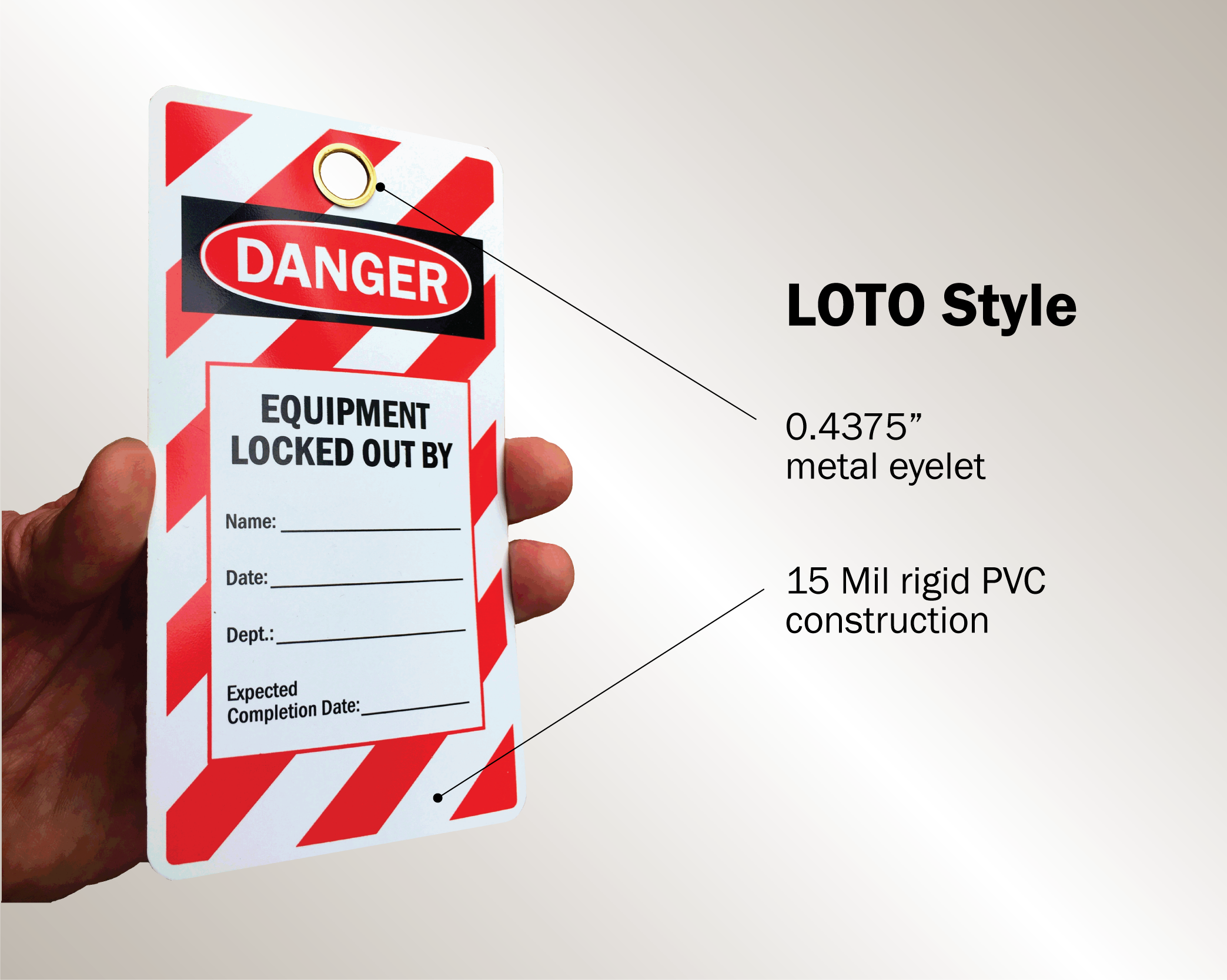
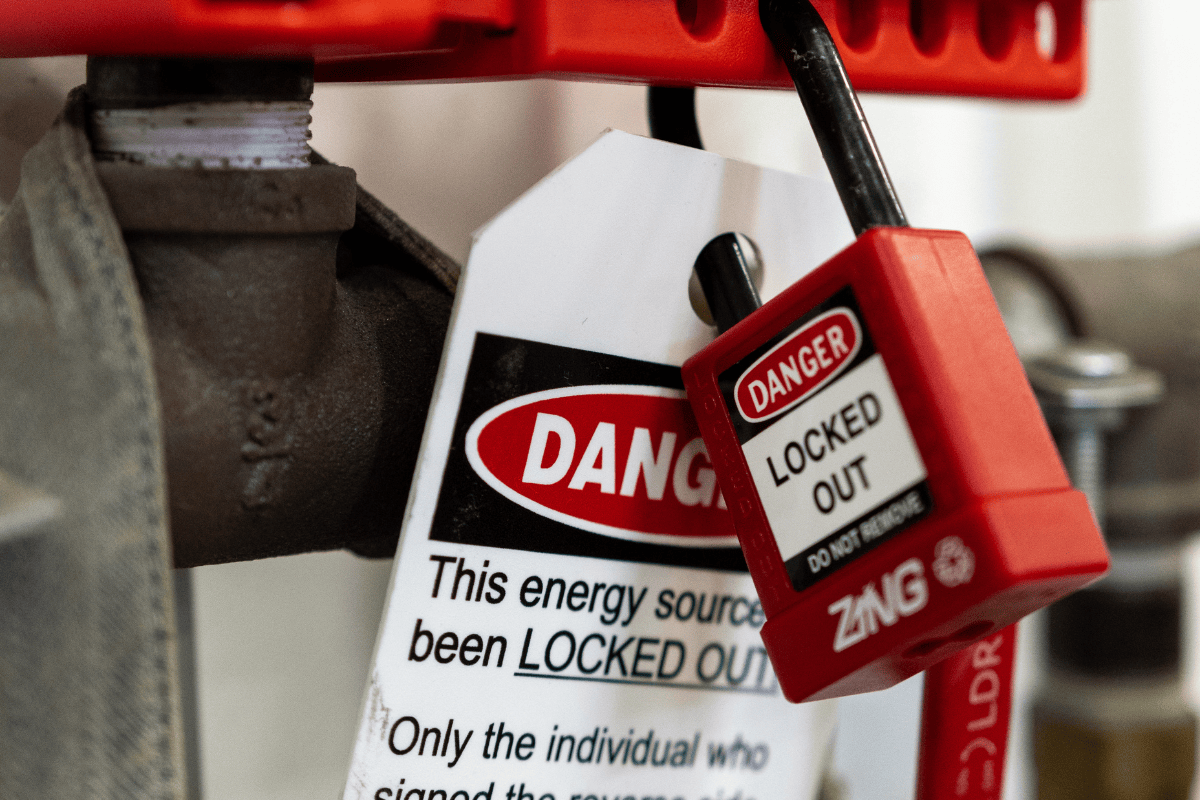
LOTO stops that risk at the source. The “lockout” component involves placing a physical lock on an energy-isolating device—like a circuit breaker, valve, or disconnect switch. Only the authorized employee who applied the lock can remove it. The “tagout” part attaches a label explaining why the equipment is locked, who locked it, and when. This dual approach ensures both physical prevention and clear communication.
Without LOTO, maintenance work becomes a game of assumption. With it, safety becomes procedural and verifiable.
Real-world example: In a paper mill, a roller mechanism jams. Before a mechanic clears the blockage, they must shut down the drive motor, lock the power disconnect with their personal lock, and tag it with their name and time. No one else can restart the system until the lock is removed—ensuring the mechanic isn’t caught in moving parts.
Where Lockout Tagout Is Used: Key Industries and Applications
LOTO isn’t limited to one type of workplace. Any environment where machinery requires servicing under hazardous conditions benefits from these protocols.
- Manufacturing plants: Assembly lines, stamping presses, robotic arms.
- Chemical processing facilities: Pumps, reactors, and pipelines carrying volatile substances.
- Power generation stations: Turbines, transformers, and high-voltage switchgear.
- HVAC and building maintenance: Boilers, chillers, and large ventilation systems.
- Agricultural operations: Grain silos, conveyors, and harvesting equipment.
Even in hospitals, LOTO applies to medical gas systems and large sterilization units.
Common mistake: Assuming small equipment doesn’t need LOTO. A 120-volt motor on a bench grinder can still cause injury if it starts unexpectedly during blade replacement. Size doesn’t eliminate risk.
The Occupational Safety and Health Administration (OSHA) standard 1910.147 explicitly covers the control of hazardous energy and mandates LOTO in virtually all general industry settings. Non-compliance isn’t just dangerous—it’s costly. OSHA penalties for LOTO violations often exceed $10,000 per incident.
How Lockout Tagout Prevents Injuries and Fatalities
The human cost of skipping LOTO is severe. According to the Bureau of Labor Statistics, hundreds of workers suffer amputations, electrocutions, or crushing injuries annually due to uncontrolled energy release. Many of these are preventable.
LOTO reduces risk through three key mechanisms:
- Physical immobilization: A lock prevents activation. It’s not enough to flip a switch—the energy source must be isolated and secured.
- Clear communication: The tag warns others not to interfere. It provides accountability and transparency.
- Verification: Before work begins, employees test the system to ensure zero energy—no voltage, no pressure, no stored motion.
Use case: During a routine maintenance check on a hydraulic press, a technician locks the main fluid valve and disconnects the power supply. They attempt to cycle the machine to verify it won’t operate. Only after confirming the system is fully de-energized do they proceed. This verification step is non-negotiable in a proper LOTO process.
Without verification, a lock is just decoration.
The LOTO Procedure: Step by Step
A successful lockout tagout process isn’t improvisational—it’s standardized. OSHA outlines a six-step sequence that must be followed consistently:
- Prepare for shutdown: Identify all energy sources and the proper isolation points.
- Shut down the equipment: Use normal stopping procedures (e.g., pressing stop button).
- Isolate the energy source(s): Turn off breakers, close valves, block moving parts.
- Apply lockout/tagout devices: Each worker applies their own lock and tag.
- Release stored energy: Bleed pressure, drain capacitors, lower suspended loads.
- Verify isolation: Attempt to restart the machine (safely) to confirm it’s de-energized.
Only after these steps are complete should maintenance begin.
Workflow tip: Use a LOTO log or checklist. Especially in multi-person jobs, a written record ensures no steps are missed and every lock is accounted for during removal.
Removing locks follows a reverse process—only the individual who applied the lock should remove it, and only after confirming the area is clear and safe for re-energization.
Common LOTO Devices and Tools
Effective LOTO relies on the right hardware. Devices vary based on energy type and equipment design. Here are five commonly used tools:
| Device | Purpose | Example Use Case |
|---|---|---|
| Lockout hasps | Allow multiple locks on a single isolation point | Maintenance team working on a shared power disconnect |
| Valve lockouts | Prevent opening of gas or fluid lines | Locking a steam line during boiler servicing |
| Circuit breaker lockouts | Secure electrical disconnects | Isolating a motor control center |
| Plug lockouts | Cover electrical plugs to prevent reinsertion | Small machinery like grinders or drills |
| Group lockout boxes | Centralize locks and tags for complex systems | Multi-trade maintenance on a production line |
Each device must be durable, standardized, and uniquely keyed to individual employees when possible. Shared master keys undermine accountability.
Limitation: Tags alone aren’t sufficient. OSHA permits tagout-only procedures only when a lock cannot be used—and even then, additional safety measures are required.
Human Factors: Why LOTO Fails Despite the Rules
Having a LOTO program on paper doesn’t guarantee safety. Real-world failures often stem from human behavior, not lack of equipment.

- Complacency: “I’ve done this a hundred times” leads to skipping steps.
- Time pressure: Supervisors push for faster repairs, bypassing safety.
- Lack of training: Temporary or contract workers unaware of protocols.
- Poor lock management: Lost keys, shared locks, or unclear tagging.
A 2020 incident at a Midwest food processing plant illustrates this: a worker bypassed LOTO to quickly clear a jam in a meat grinder. The machine powered on remotely, resulting in a severe hand injury. Investigation found no lockout training records for the employee.
Best practice: Conduct regular LOTO audits and refresher training. Empower workers to stop work if procedures aren’t followed—without fear of retaliation.
Safety culture isn’t built in a day. It’s enforced every time someone chooses to lock out instead of assume.
Integrating LOTO Into Broader Safety Systems
Lockout tagout isn’t a standalone procedure. It’s part of a larger energy control ecosystem.
Facilities with mature safety programs integrate LOTO with: - Permit-to-work systems that authorize high-risk tasks - Machine-specific LOTO procedures detailing exact steps for each asset - Digital LOTO management software that logs applications, tracks compliance, and schedules audits - Pre-job safety briefings that review isolation points and responsibilities
Example: An automotive plant uses digital tablets at each workstation. Before maintenance, the mechanic pulls up the machine’s LOTO procedure, scans their ID, and logs each step. Supervisors receive real-time alerts, and the system prevents premature restarts.
Technology enhances compliance—but it doesn’t replace discipline. The human element remains central.
Final Thoughts: Make LOTO Non-Negotiable
What is a lockout tagout used for? To ensure that when someone puts their hands on machinery, they do so with confidence, not risk. It’s a simple concept with life-or-death consequences.
No production target, maintenance deadline, or minor repair is worth a preventable injury. LOTO isn’t bureaucracy—it’s a promise. A promise that every worker returns home whole.
Implement it rigorously. Train without exception. Audit without compromise. Make every lock count.
Frequently Asked Questions
What is the main goal of lockout tagout? The main goal is to prevent the unexpected startup or release of hazardous energy during maintenance, protecting workers from injury.
When should lockout tagout be used? LOTO must be used whenever employees service or maintain equipment that could release hazardous energy—such as during cleaning, repair, or adjustment.
Who is responsible for applying a lockout tagout device? The authorized employee performing the service must apply their own lock and tag. No one else should remove it.
Can tagout be used instead of lockout? Only when energy-isolating devices can’t accept a lock. Tagout alone is less secure and requires additional safety measures.
What types of energy does LOTO control? Electrical, mechanical, hydraulic, pneumatic, chemical, thermal, and gravitational energy—all are covered under LOTO protocols.
Is LOTO required by law? Yes. OSHA standard 1910.147 mandates LOTO in general industry, with specific requirements for procedures, training, and equipment.
How often should LOTO procedures be reviewed? At least annually, or whenever there’s a change in equipment, process, or personnel roles.
FAQ
What should you look for in What Is a Lockout Tagout Used For: Safety Explained? Focus on relevance, practical value, and how well the solution matches real user intent.
Is What Is a Lockout Tagout Used For: Safety Explained suitable for beginners? That depends on the workflow, but a clear step-by-step approach usually makes it easier to start.
How do you compare options around What Is a Lockout Tagout Used For: Safety Explained? Compare features, trust signals, limitations, pricing, and ease of implementation.
What mistakes should you avoid? Avoid generic choices, weak validation, and decisions based only on marketing claims.
What is the next best step? Shortlist the most relevant options, validate them quickly, and refine from real-world results.